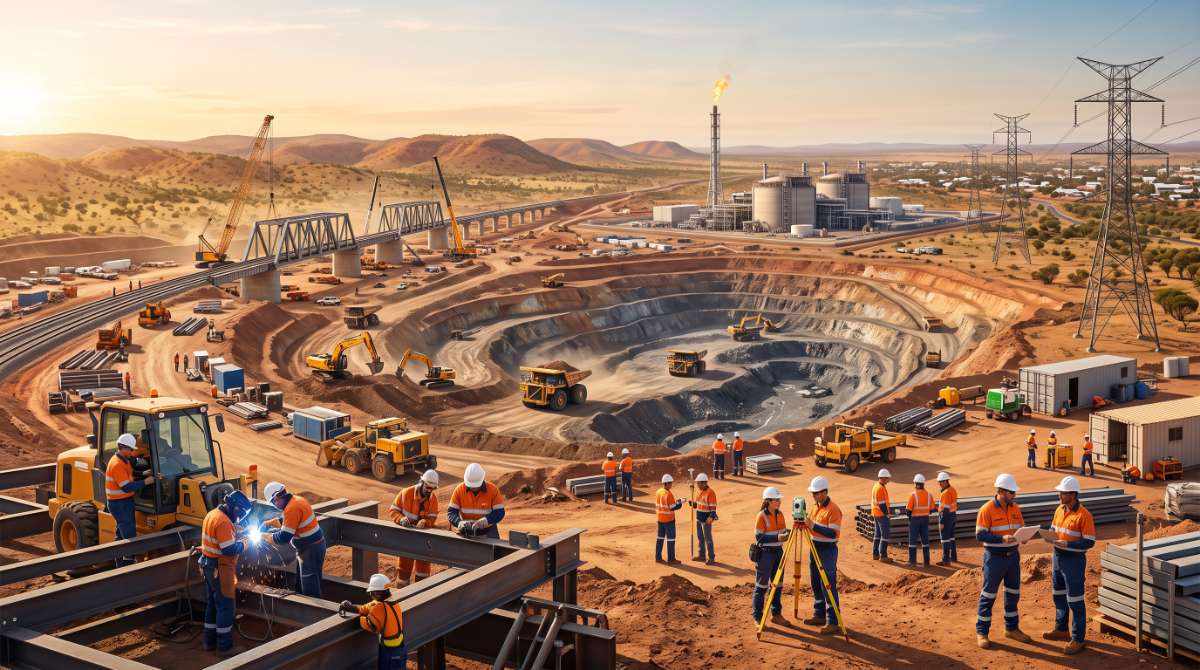
While politicians in Canberra argue over migration numbers, a different conversation is happening in boardrooms across the mining, construction, and infrastructure sectors: employers are warning they simply don't have enough workers to get the job done. For anyone job hunting in a skilled trade or technical field, that gap is where the real opportunity sits.
Here's a look at which employers are sounding the alarm loudest, how many roles they say they need filled, and what it means for your job search right now.
The Employers Speaking Up — And Why
Australia's peak business and resources bodies have gone public this month pushing back against proposed migration cuts, and their reasoning comes down to one thing: they can't fill open roles with the local workforce alone.
Australian Industry Group chief Innes Willox has been blunt about the stakes, warning that major infrastructure builds — including the Brisbane Olympics construction programme — won't get finished without migrant workers. He's framed the situation as a global competition for talent, arguing employers need the system to stay "welcoming" if Australia wants to keep attracting the workers it needs.
The mining and resources sector has put an actual number on the gap. Minerals Council chief executive Tania Constable says her members need approximately 40,000 new migrant workers over the next three years just to staff projects that are already approved or underway. That's not a wishlist — it's existing, funded work with no one currently lined up to do it.
Where the Job Openings Actually Are
The numbers point to a few sectors carrying the bulk of current hiring pressure:
Mining and resources: According to the Minerals Council, migrant worker numbers in the sector have more than doubled since 2021 — and shortages are still widespread across the board. In Western Australia specifically, Chamber of Minerals and Energy chief Aaron Morey says migrant workers matter more to that state's economy than to any other in the country, a sign of just how concentrated the hiring need is in WA's resources projects.
Major infrastructure and events builds: Large-scale projects like the Brisbane 2032 Olympics infrastructure programme are cited directly as builds that depend on migrant labour to stay on schedule.
Regional and agricultural work: Beyond permanent skilled roles, temporary and seasonal positions — particularly in agriculture — rely heavily on working holiday visa holders and Pacific Australia Labour Mobility (PALM) scheme workers to fill regional labour gaps that the local workforce doesn't cover.
A Wrinkle for Working Holiday Job Seekers
If you're planning to job hunt in Australia on a working holiday visa, there's one development worth knowing about: the government has confirmed it has quietly slowed down processing of working holiday visa applications, though it hasn't given a public reason. Applications are still being processed, just at a reduced pace — worth factoring into your timeline if you're planning regional or agricultural work.
Industry voices have pushed back on anything that would reduce the temporary workforce further, noting that businesses in regional Australia often need temporary labour to fill short-term gaps rather than permanent hires — meaning backpackers and seasonal workers play a role that permanent migration numbers don't replace.
What Employers Actually Want From Canberra
It's worth noting that none of the business or resources groups quoted are asking for unlimited migration — they're asking for stability and enough supply to match demand. Ms Constable said she'll continue advocating for a balanced approach across all political parties, "without prejudice and without favour." Mr Morey similarly stressed that maintaining — or ideally increasing — skilled migration levels matters regardless of which party is in government.
That's a useful signal for job seekers: the pressure from employers isn't about opposing any single party's policy, it's a straightforward statement that current job vacancies in these sectors can't be filled without overseas workers, whoever is setting the rules.
What This Means for Your Job Search
If you're a skilled tradesperson, engineer, or technician evaluating opportunities in Australia, the underlying employer demand hasn't gone anywhere, regardless of how the political debate over intake numbers plays out:
- Mining and resources employers say they need around 40,000 additional workers over the next three years
- Major infrastructure and events builds are citing migrant labour as essential to staying on schedule
- Industry groups are actively and publicly lobbying to keep skilled migration pathways open
Political proposals to cut migration remain proposals — not confirmed changes to the visa categories employers are currently hiring under. For job seekers with in-demand skills, that gap between political rhetoric and on-the-ground hiring need is exactly where the opportunity lies.
Looking for roles with employers who are actively hiring skilled overseas workers in Australia's mining, construction, and infrastructure sectors? Job Finder can help match your experience to the employers who need it most.