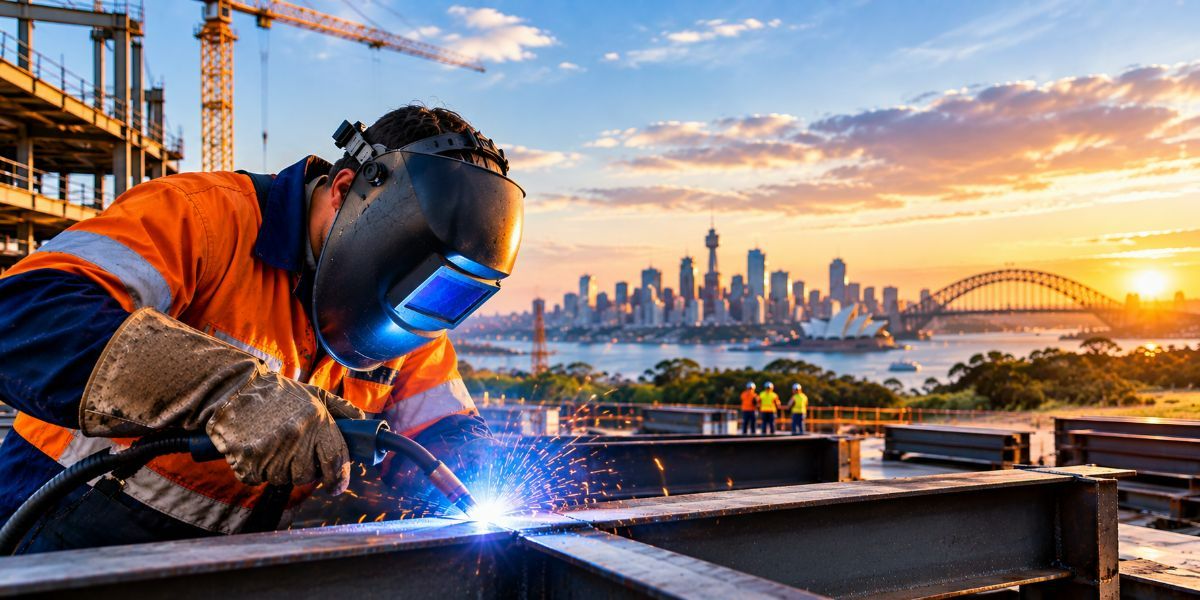
Welding and fabrication jobs are tied to some of Australia's biggest sectors, including infrastructure, defence and renewable energy. But a new industry survey shows the job market is more complicated than "shortage means easy hiring." Here is how to read the signals and put yourself in front of the right employers.
The headline: skilled people are scarce, but confirmed work is patchy
Weld Australia's 2026 Industry and Workforce Outlook Survey found that 89.2 per cent of respondents believe Australia does not have enough qualified welders to meet expected infrastructure and defence demand. That is encouraging for job seekers.
There is a catch, though. Sixty per cent of businesses had three months or less of confirmed work, 20 per cent had no confirmed pipeline, and almost 60 per cent of fabrication workshops were running below 75 per cent capacity. Employers cited both a lack of work and a lack of skilled staff.
For you, this means demand for skills is real, but hiring can depend on when contracts land. Timing and targeting matter.
What the numbers mean for your job search
1) Ask about the pipeline. Since many workshops have limited confirmed work, ask in interviews how far ahead their projects are booked. A business with a steady order book is likely to offer more secure hours.
2) Watch for growth signals. Even under cost pressure, half of respondents increased technology investment, 42.8 per cent increased staff training and 39.2 per cent increased research and development. Employers who invest in equipment and training are often better places to build a career.
3) Expect tight budgets. Around 82.1 per cent reported higher energy prices and 78.5 per cent higher material costs, while only 28.5 per cent raised their selling prices. Nearly 40 per cent saw profit margins decline. Employers are looking for people who are productive from the start, so be ready to show what you can do.
How to stand out: lead with standards
Compliance was one of the survey's biggest themes. About 71.4 per cent of respondents said imported fabricated products at least sometimes fail to meet Australian standards, and 53.6 per cent said it happens often or very often. Weld Australia wants independent verification of fabricated steel regardless of where it is made, and support for a proposed Australian Fabrication Authority.
In a sector focused on quality, your CV should make it easy for an employer to see that you can work to Australian welding and fabrication standards. Practical ways to do that:
- 1. List your certifications and qualifications clearly, with dates.
- 2. Describe the types of projects, materials and processes you have worked on.
- 3. Mention any quality checks, inspections or compliance procedures you have been part of.
- 4. Keep documentation of your work history ready to share.
Where the jobs may come from
Weld Australia is urging federal and state governments to strengthen local content procurement requirements, improve compliance verification, support advanced manufacturing adoption among small and medium-sized businesses, and weigh whole-of-life value rather than just upfront cost when awarding contracts. If those changes gain traction, more infrastructure, defence and renewable energy work could go to local fabricators, which would likely mean more roles over time. It is worth following these developments if you plan to be job-ready when the work picks up.
New to the trade? Pathways exist
CEO Geoff Crittenden said apprenticeships, pre-apprenticeship programs, TAFE pathways and industry-led training will be needed to strengthen the workforce. If you are a school leaver, career changer or someone looking to upskill, these are the routes the industry is promoting.
Around 79.5 per cent of respondents also felt welding does not receive the respect it deserves. The trade is working to lift its profile, and skilled tradespeople remain central to the projects the country wants to build.
Quick checklist before you apply
- 1. Update your CV with certifications and standards experience
- 2. Research employers' recent projects and growth plans
- 3. Prepare questions about project pipelines and training support
- 4. Look into apprenticeship or TAFE options if you are building skills
- 5. If you need visa sponsorship, check current requirements with the Department of Home Affairs or a registered migration agent
The bottom line
Australia's welding and fabrication sector has a skills gap and a work-pipeline gap at the same time. The best approach is to target employers with strong project visibility, show that you meet Australian standards, and keep building your skills. Those who do are well placed as demand grows.