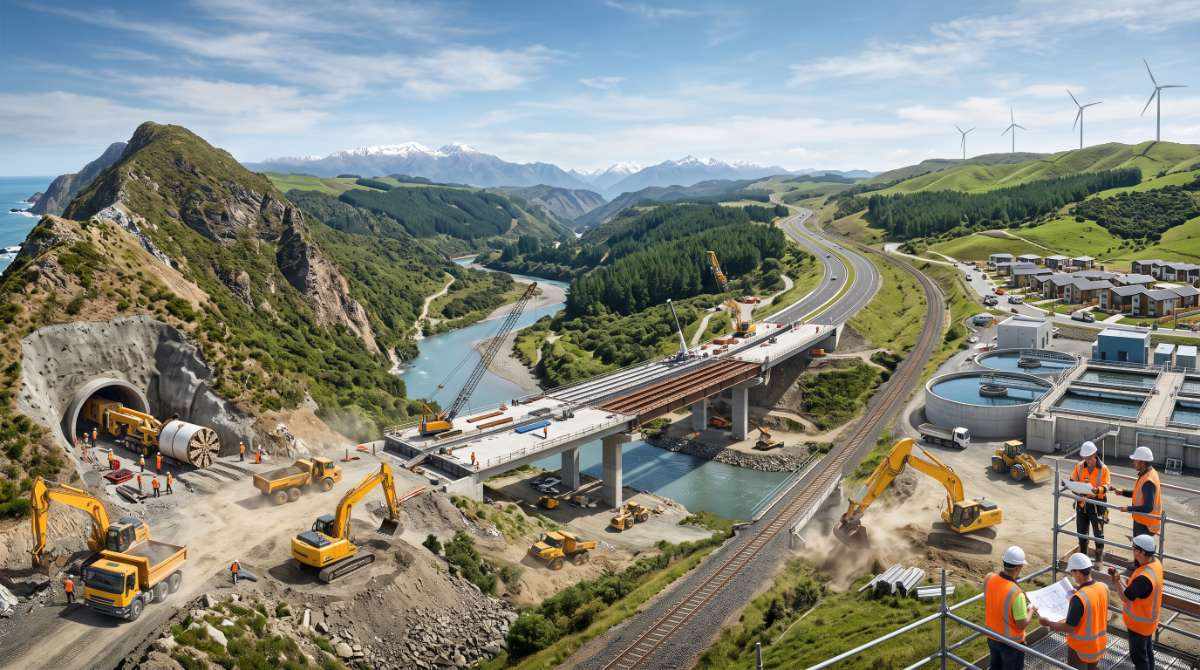
If you've been scrolling job boards wondering whether now is a good time to switch industries or countries, New Zealand's construction and infrastructure sector just became one of the easiest markets in the world to get noticed in. The problem employers have isn't too many applicants — it's not enough of them.
Why This Job Market Looks Different Right Now
New Zealand is sitting on nearly $200 billion in infrastructure projects — roads, rail, energy, water systems — either underway or approved. Normally that kind of project volume would flood job boards with competition. Instead, industry leaders are openly saying the money isn't the issue. The issue is that there simply aren't enough people applying, qualified or otherwise, to fill the roles this pipeline creates.
Tracey Ryan, chief executive of Aurecon New Zealand and chair of Infrastructure New Zealand, has been pushing the industry to see infrastructure work as a long-term career path rather than a short project gig — which is exactly the kind of shift that benefits job seekers looking for stability, not just a one-off contract.
The Numbers That Explain Why Roles Are Sitting Open
- Construction employment fell 3.5% in the year to March 2025, and the industry has lost about 16,000 jobs over two years — but that's people leaving, not roles disappearing. Positions still need filling.
- New Zealand lost a net 46,400 citizens in the year to September 2025, with most heading to Australia for higher pay. Every one of those departures left a vacancy behind.
- The country needs about 2,300 new engineers a year and isn't getting close, partly because a third of engineering graduates quit the profession within two years of starting — meaning even entry-level and career-change candidates have room to move up fast.
- Roughly a third of the current engineering workforce trained overseas, proof that qualifications from outside New Zealand are already well represented in the industry.
Infrastructure New Zealand's Nick Leggett has pointed out that when projects get delayed or cancelled, people either leave the industry or leave the country — which, from a job seeker's side, just means less competition for the roles that remain open.
What Happens When Roles Go Unfilled
The Auckland City Rail Link is a real example of what a talent gap looks like in practice. More than 100 tunnel boring machine operators left New Zealand once that project wrapped up, because there wasn't a next role lined up for them locally. Employers are now scrambling to attract that kind of specialist back for future projects like a Waitematā Harbour crossing — which is good news if you have (or are willing to build) that skill set, because demand for it isn't going away.
Engineering New Zealand's Dr Richard Templer has said what the industry needs most is a clear, multi-year view of upcoming work, so professionals can actually plan a career around it instead of chasing one project at a time. For job seekers, that's a signal this sector is shifting toward longer, more predictable roles rather than short-term contracts.
The Job Numbers Are Only Going Up
Government forecasts have infrastructure activity climbing from $16.9 billion in 2024 to $19.6 billion by 2030, with total construction spend reaching $55.7 billion in 2025. Transport alone shows the scale of hiring ahead: officials estimated the sector would need around 65,000 workers by 2026/27, up from 40,000 just a few years earlier — growth even officials admitted was faster than the current workforce trend could keep up with.
What This Means If You're Job Hunting
Engineers, project managers, tradespeople, and anyone with construction or infrastructure experience are looking at a job market where demand is outrunning supply across transport, energy, water, and rail. That imbalance tends to mean more openings, faster hiring decisions, and stronger negotiating position for candidates — especially those willing to relocate or upskill into shortage areas like tunnelling, civil engineering, and large-scale project delivery.
If you've been putting off a job search because you assumed the market was crowded, New Zealand's infrastructure sector is one of the clearer exceptions right now.