If your career plan involves studying in Australia and then transitioning into local employment, there's a policy shift on the horizon worth building into your planning right now — before it becomes a scramble.
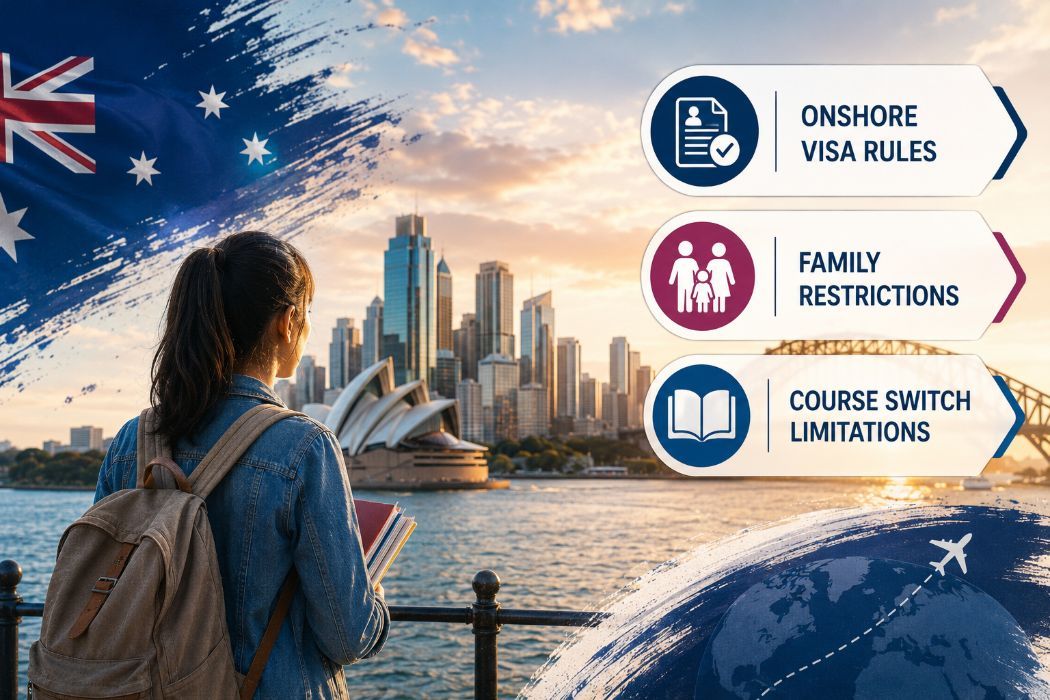
Reports from The Australian suggest the Albanese government is preparing a significant immigration package that would tighten several rules directly affecting international students: restrictions on applying for visas from within Australia, narrower eligibility for bringing partners or dependants, and tougher limits on switching between courses or education sectors. For anyone treating study as step one of a longer job-hunting strategy, each of these has a direct knock-on effect on how — and when — you can actually start working.
Why Job Seekers, Not Just Students, Should Care
It's easy to read this as a university story. It isn't, really. A large share of international graduates use their time in Australia to build local work experience, network into industries, and eventually move onto a Temporary Graduate visa (subclass 485) or an employer-sponsored pathway. That entire sequence depends on being able to stay in the country, adjust your visa status without leaving, and — for many people — have your family alongside you while you job hunt and settle into a role.
The proposed changes touch all three of those pressure points.
What's Reportedly Changing
- 1) Applying for a new visa from inside Australia may get harder. If you're planning to extend your stay, switch visa subclasses, or transition toward work rights while still in the country, losing the onshore application option could mean building international travel into what used to be a seamless local process.
- 2) Bringing a partner or children is becoming the exception, not the rule. Reported exemptions would cover postgraduate research students, government-sponsored scholars, and students from Pacific nations and Timor-Leste. If your job search and settlement plans assume your family will be with you, it's worth checking now whether your course type would actually qualify.
- 3) Switching study pathways is getting tighter. Moving from a university degree into a VET qualification — sometimes used to pivot toward roles in trades or technical fields with stronger job prospects — may become more restricted going forward.
The Bigger Migration Squeeze Behind the Headlines
This isn't an isolated tightening. The Australian government has set a target of bringing net overseas migration down to 225,000 by 2027/28, a steep drop from the 538,000 peak recorded in 2022/23 after borders reopened. International education is one of the biggest single contributors to that migration count, which is exactly why student visa settings keep landing at the center of reform.
Assistant Minister for International Education Julian Hill has said plainly that the government isn't going back to a volume-driven approach and intends to keep managing "the size and the shape of the onshore student market." Translation for job seekers: this is unlikely to be the last round of tightening, and building flexibility into your plans now is a safer bet than assuming today's rules will hold.
Australia Isn't Alone Here
If you're weighing Australia against other destinations, it's worth knowing this trend isn't unique to one country. The UK introduced near-identical restrictions on student dependants back in 2024, limiting the right to bring family to postgraduate research students and government-sponsored scholars. Canada has separately raised financial requirements and capped study permits over the same period. The "study, settle, and job hunt with your family alongside you" model that used to differentiate some destinations is narrowing across the board — so switching countries isn't necessarily a way around this.
What the Sector Is Saying — And What It Means for You
Universities Australia chair Carolyn Evans has argued publicly that cutting international student numbers carries consequences that go well beyond university budgets — a warning that applies just as much to the graduates and job seekers whose plans get disrupted along the way.
Group of Eight chief executive Vicki Thomson made a sharper point: that policy shouldn't treat every student, provider, and institution as the same. For job seekers, that's a reason to be precise about your own situation rather than assuming the worst-case reading applies to you — some pathways, course types, and countries of origin retain more flexibility than others under the reported plan.
How to Job-Search Smarter If You're Studying (or Planning to Study) in Australia
- 1) Check whether your course qualifies for family-visa exemptions before you commit. If bringing a partner or children is part of your plan, postgraduate research pathways currently look safer than standard coursework degrees under the reported changes.
- 2) Don't assume onshore flexibility will still exist by the time you graduate. If your job-search strategy relies on adjusting your visa status without leaving Australia, start researching backup options — including what an offshore reapplication would actually require.
- 3) Move on course or sector switches sooner rather than later. If you're considering a pivot from university study into a VET qualification to target a specific industry, the reported restrictions suggest that door may be closing — don't leave the decision for your final semester.
- 4) Watch the September and following-month timeline closely. Student visa changes are reportedly being fast-tracked, with the wider immigration package expected the month after. If you're mid-application or mid-course, treat the next few weeks as a genuine deadline for reviewing your options, not background noise.
- 5) Build your job search around employer-sponsored pathways early. With onshore transitions potentially harder, starting conversations with employers about sponsorship well before your studies end — rather than after graduation — could matter more than ever.
The Bottom Line
None of this means Australia is off the table as a study-and-work destination — but it does mean the path from classroom to career is likely to require more upfront planning than it used to. If your job search depends on visa flexibility, family relocation, or the ability to pivot your qualifications along the way, treat these reported changes as a prompt to firm up your plan now, while there's still time to adjust it.