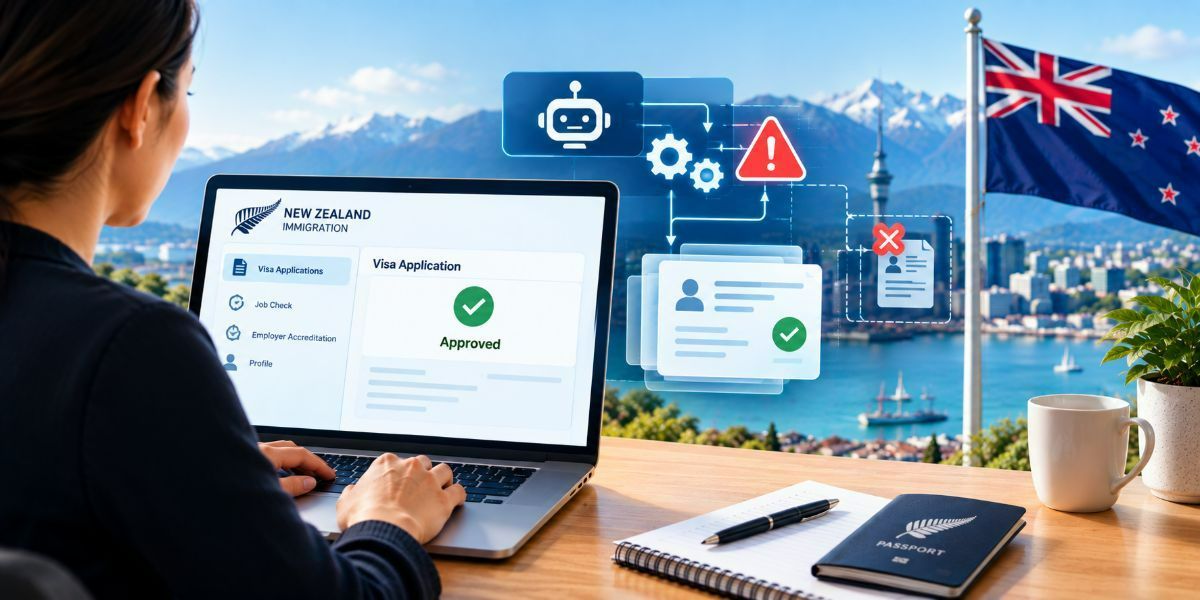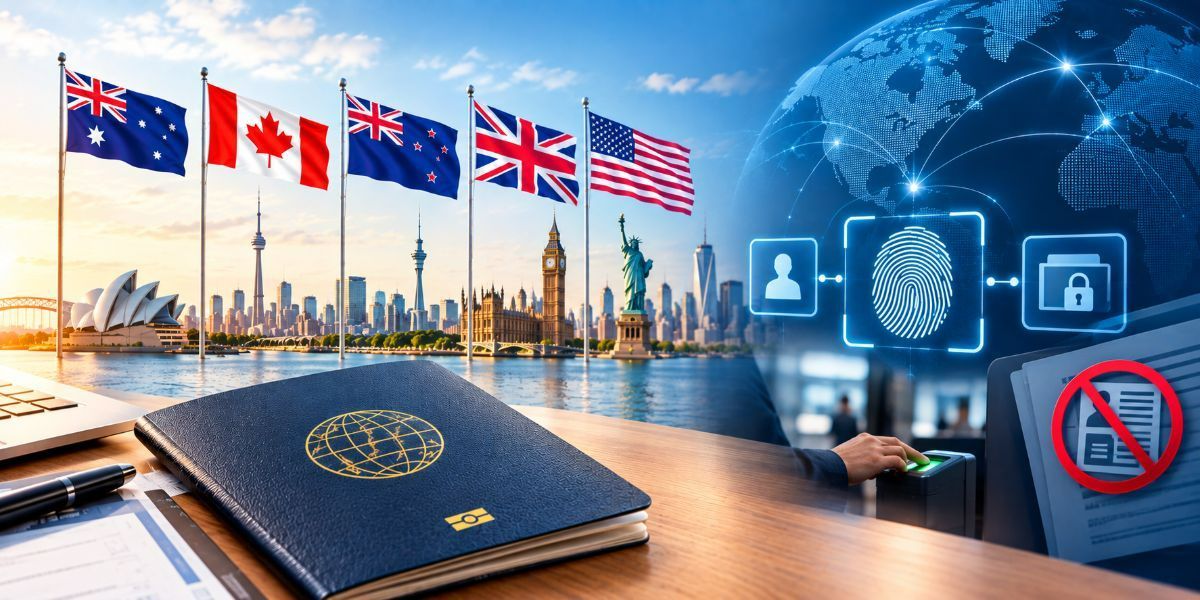
Five countries have paused plans to share criminal conviction data, but identity and fingerprint checks continue. Here is what job seekers heading overseas should know before applying.
Landing the job is only step one
You have polished your CV, aced the interviews and received an offer from an employer in Australia, Canada, New Zealand, the UK or the US. Before you can start, there is one more hurdle: the visa, and the background checks that come with it.
News from the Migration 5 (M5), the five-country grouping made up of those same nations, is relevant to anyone in that position. Leaders agreed in April 2026 to suspend work on a possible exchange of criminal conviction data about their own citizens.
The news in plain terms
According to RNZ, the M5's current cooperation is aimed at managing identity data for migration purposes. It does not pass conviction records to New Zealand Police, and countries do not share information about their own citizens through it.
Later talks looked at whether anonymised fingerprint data could be used to check police or criminal records. New Zealand agencies decided that under existing law, foreign authorities have no grounds to access its police or court conviction data for migration purposes. Immigration New Zealand's identity manager, Matt Gibbs, said no biometric or conviction data was transferred during the exploratory work. The subgroup has not formally met since a virtual meeting on 27 March 2025.
What this means for you as a job seeker
Good to know: There is no automatic, government-to-government sharing of criminal convictions between these countries under this framework. That does not mean you can skip disclosure. Visa applications commonly ask for police certificates and character declarations, and you are expected to answer honestly.
Also good to know: Identity checks are very much alive. New Zealand has had automated information-sharing agreements with its partners since the early 2010s, except with the UK. The partners agreed a quality-control system in May 2025, and the first annual checks began in early 2026. New Zealand's review of 2025 found no privacy breaches, no access security issues and no inappropriate disclosures.
The scale of identity checking
Official Information Act documents give a sense of how routine this is:
- Australia made over one million traveller data requests to New Zealand in the year to April 2026, with 676 fingerprint matches.
- New Zealand made about 4,000 requests each to Canada, Australia and the UK, with 383, 340 and 283 positive results.
- Canadian and US request data, and New Zealand's requests to the US, were redacted or withheld.
The takeaway: your fingerprints and identity details may be checked against partner records, so the information you give must be consistent everywhere.
Job seeker checklist before you apply for a visa
- 1) Use your name and date of birth exactly as they appear on your passport, on every form.
- 2) Gather your police certificates early. Some countries take weeks to issue them, and a slow certificate can delay your start date.
- 3) List all past visa applications and refusals, even from years ago, if the form asks.
- 4) Keep copies of everything: applications, decision letters, travel history.
- 5) Tell your employer or migration adviser about complications up front. A past conviction or refusal is easier to manage when disclosed early.
- 6) Get professional advice if your history is complicated.
A note for employers' offers
Ask your prospective employer how they handle sponsorship timelines and whether they support the visa process. Knowing the checks ahead of time helps you plan notice periods and relocation dates realistically.
The bottom line
The M5 has paused sharing citizens' criminal convictions, but its identity and fingerprint checks are busy and ongoing. For job seekers, accurate paperwork and honest answers are still the best way to get from job offer to first day.